
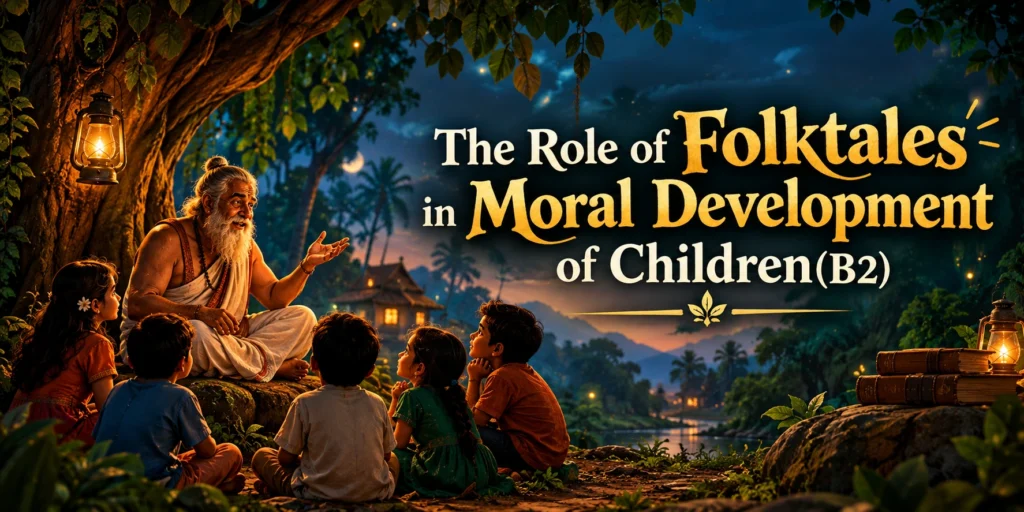
Introduction to Folktales and Moral Learning
Folktales have shaped human societies through generations of storytelling traditions.
They carry values, beliefs, and lessons that guide young minds carefully.
Children learn right and wrong through engaging and memorable narrative structures.
These stories simplify complex moral ideas into understandable life situations.
Parents and elders often use folktales to teach discipline and empathy.
Storytelling creates emotional connections that strengthen moral understanding in children.
Thus, folktales become powerful tools in early childhood moral education.
Understanding Moral Development in Children
Moral development refers to how children learn values, ethics, and behavior.
It begins at an early age through observation, imitation, and guided experiences.
Children gradually understand fairness, kindness, honesty, and responsibility through interactions.
Stories play a major role in shaping these developing ethical frameworks.
They allow children to see consequences of good and bad actions clearly.
Moral reasoning improves when children relate themselves to story characters deeply.
Therefore, folktales act as practical guides in moral growth processes.
How Folktales Teach Right and Wrong
Folktales present clear distinctions between good characters and bad characters.
Heroes often display courage, kindness, honesty, and selflessness in difficult situations.
Villains usually represent greed, dishonesty, cruelty, and selfish behavior patterns.
Children observe outcomes where good actions lead to rewards and respect.
Bad actions often result in punishment, failure, or social rejection consequences.
This pattern helps children understand cause and effect relationships clearly.
As a result, they internalize moral values through repeated storytelling experiences.
Role of Characters in Moral Learning
Characters in folktales serve as role models for young developing minds.
Children emotionally connect with heroes and aspire to imitate their actions.
They also learn to avoid behaviors shown by negative or harmful characters.
Animal characters often simplify human behavior for easier understanding by children.
Personified figures make moral lessons more engaging and relatable for listeners.
These character-driven lessons leave lasting impressions on young learners effectively.
Thus, storytelling characters become silent teachers of ethics and behavior.
Cultural Values Embedded in Folktales
Folktales reflect cultural traditions, customs, and societal expectations of communities.
They teach respect for elders, importance of family, and social responsibility.
Different regions highlight unique moral values based on their cultural backgrounds.
Children learn cultural identity while understanding universal human values simultaneously.
Stories pass down traditions that might otherwise fade over generations.
They create a sense of belonging and respect for cultural heritage deeply.
Therefore, folktales preserve both morality and cultural continuity effectively.
Enhancing Empathy Through Storytelling
Folktales help children understand emotions and perspectives of different characters.
They experience joy, sadness, fear, and hope through story-based situations.
This emotional journey builds empathy and compassion in young listeners gradually.
Children learn to consider others’ feelings before making decisions or actions.
Stories encourage kindness and cooperation in real-life social interactions.
Empathy developed through storytelling supports healthy emotional intelligence growth.
Hence, folktales play a crucial role in shaping compassionate individuals.
Encouraging Critical Thinking and Decision Making
Folktales often present dilemmas that require thoughtful decision making by characters.
Children analyze situations and predict possible outcomes while listening actively.
They begin to question actions and understand consequences in deeper ways.
This process improves reasoning skills and independent moral judgment abilities.
Story discussions further enhance understanding of ethical complexities in life.
Children learn that choices influence outcomes and responsibilities significantly.
Thus, folktales contribute to both moral and cognitive development effectively.
Folktales in Modern Education Systems
Educators increasingly use folktales as teaching tools in classrooms worldwide.
They integrate stories into lessons to make learning engaging and meaningful.
Folktales support language development, creativity, and value-based education simultaneously.
Teachers use storytelling to address behavioral issues and promote positive attitudes.
Interactive storytelling sessions encourage participation and deeper understanding among students.
Modern adaptations make traditional stories relevant to contemporary children easily.
Therefore, folktales remain important even in today’s digital learning environments.
Influence of Folktales in the Digital Age
Digital platforms now present folktales through animations, audiobooks, and videos.
These formats attract children and maintain interest in traditional storytelling practices.
However, the core moral lessons remain unchanged despite technological transformations.
Parents and educators must ensure content retains original ethical meanings carefully.
Balanced use of digital and oral storytelling enhances learning experiences effectively.
Technology can expand access to diverse cultural folktales globally for children.
Thus, folktales continue evolving while preserving their moral teaching essence.
Conclusion: Timeless Value of Folktales
Folktales remain essential tools for moral development in growing children worldwide.
They combine entertainment with education in a natural and impactful manner.
Stories shape behavior, attitudes, and ethical understanding from early childhood stages.
They build empathy, critical thinking, and strong cultural awareness effectively.
Parents, teachers, and communities must continue sharing these valuable narratives regularly.
Preserving storytelling traditions ensures future generations learn meaningful life lessons.
Ultimately, folktales nurture responsible, kind, and thoughtful individuals in society.