
A. Dance & Theatre Forms
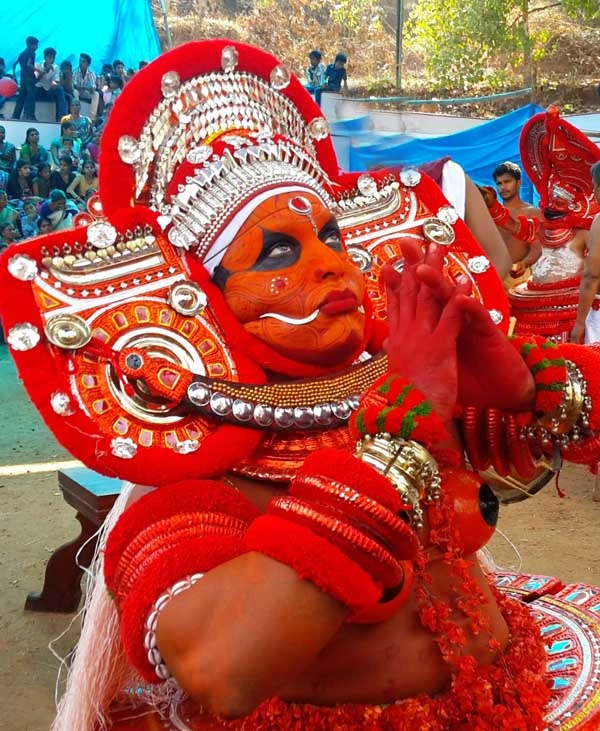
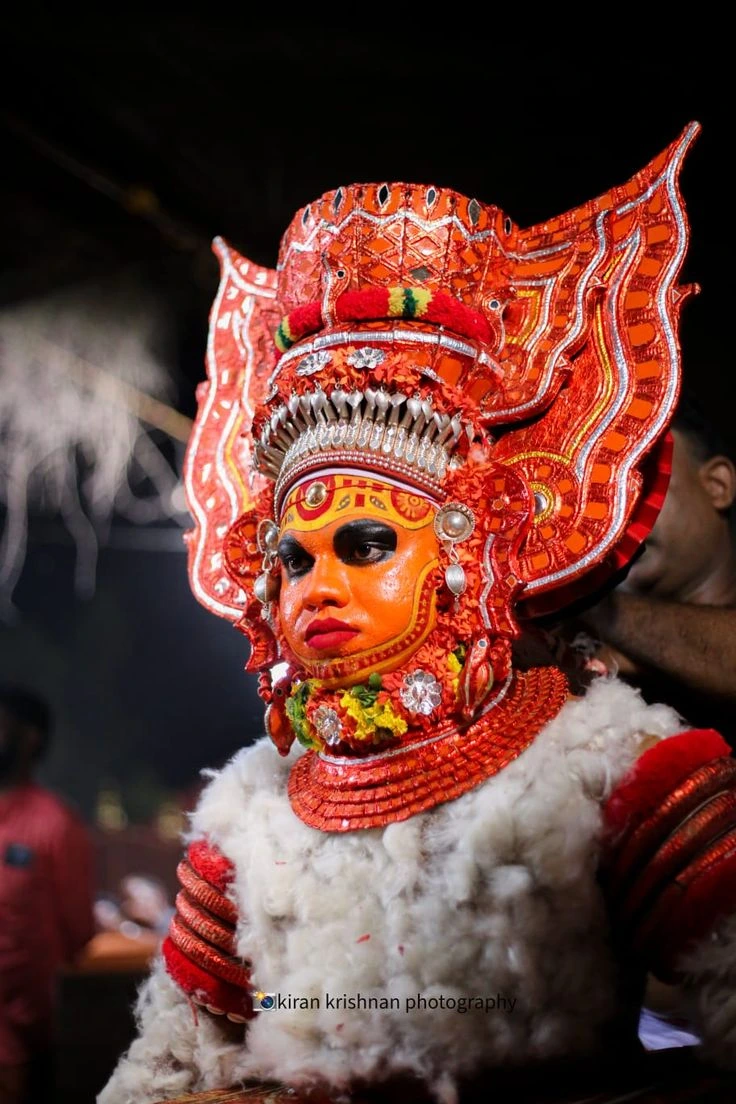
1.THEYYAM
What is Theyyam?
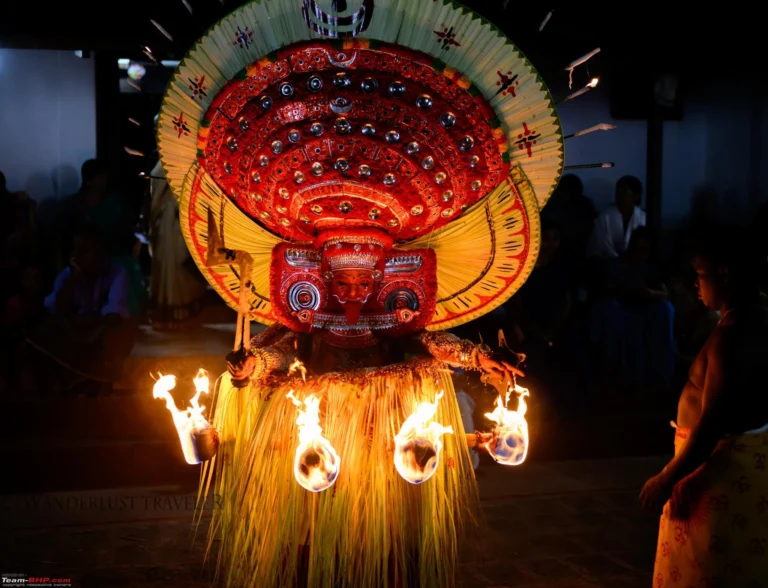
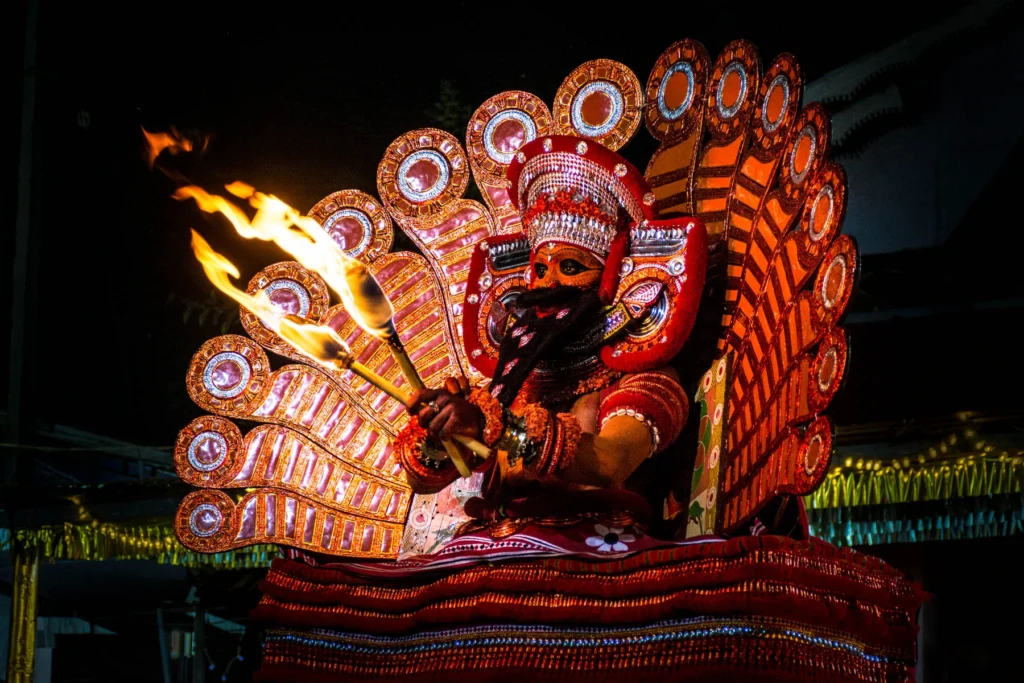
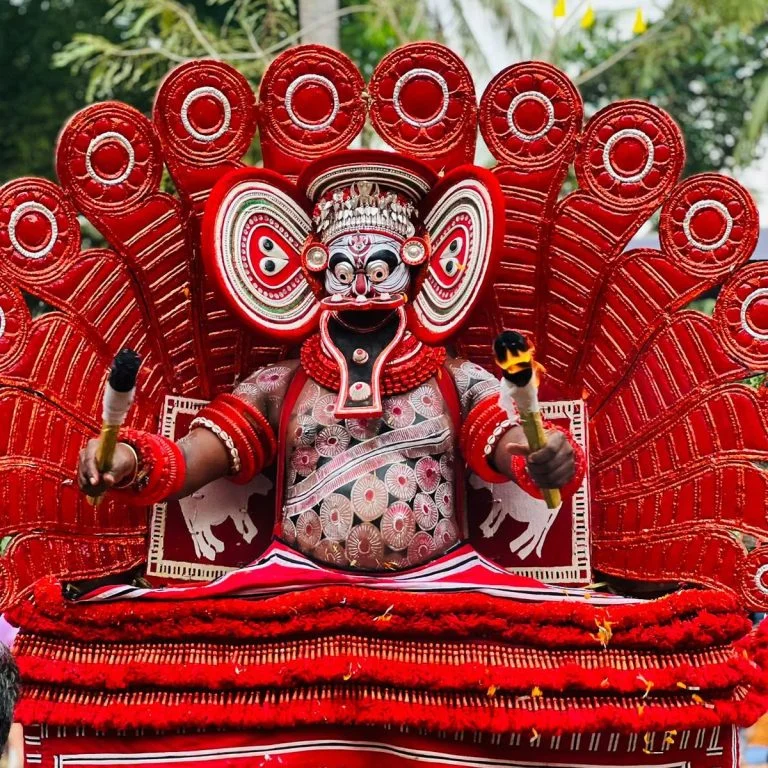
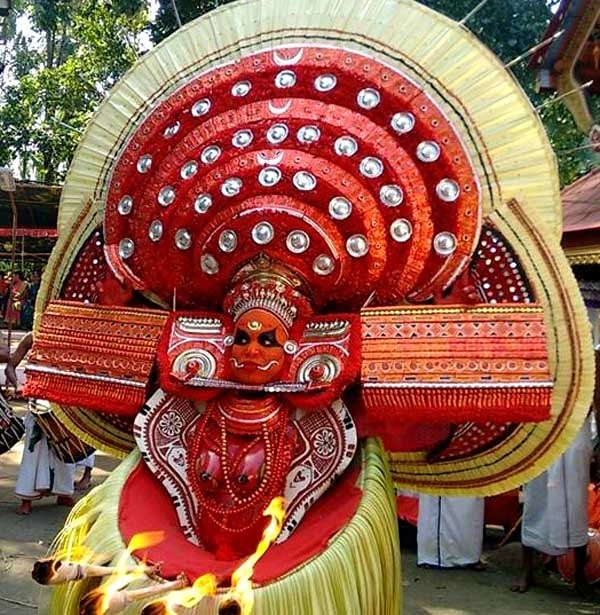
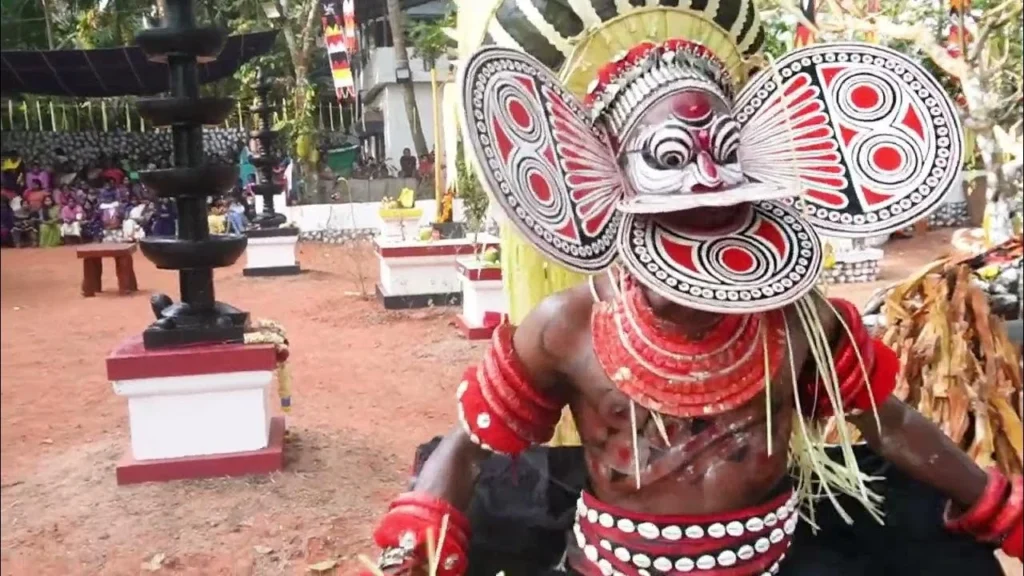
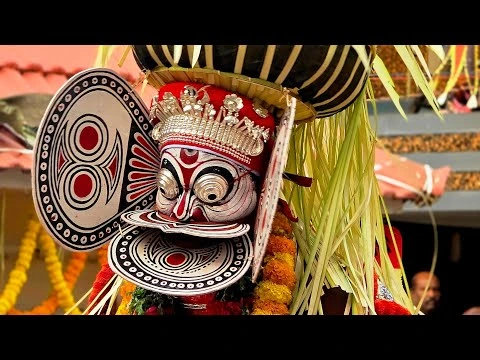
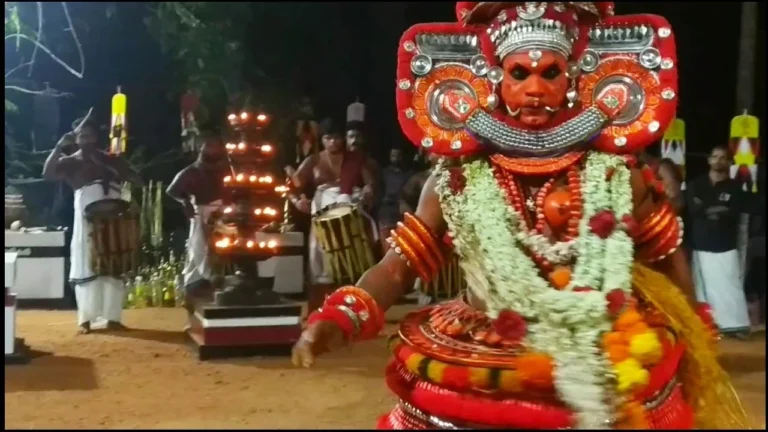
Theyyam is a powerful ritual art form from North Kerala, especially in regions like Kasaragod and Kannur. It is not just a performance — it is a divine transformation where the performer becomes a living god.
The word Theyyam comes from “Daivam” (God). During the ritual, devotees believe the performer is possessed by the deity and can bless, heal, and even answer questions.
🔥 Why Theyyam is Unique
- 🩸 Not acting — transformation: The performer becomes the deity
- 🔥 Fire rituals: Walking through flames, intense energy
- 🎭 Massive costumes: Up to 10–15 feet tall headgear
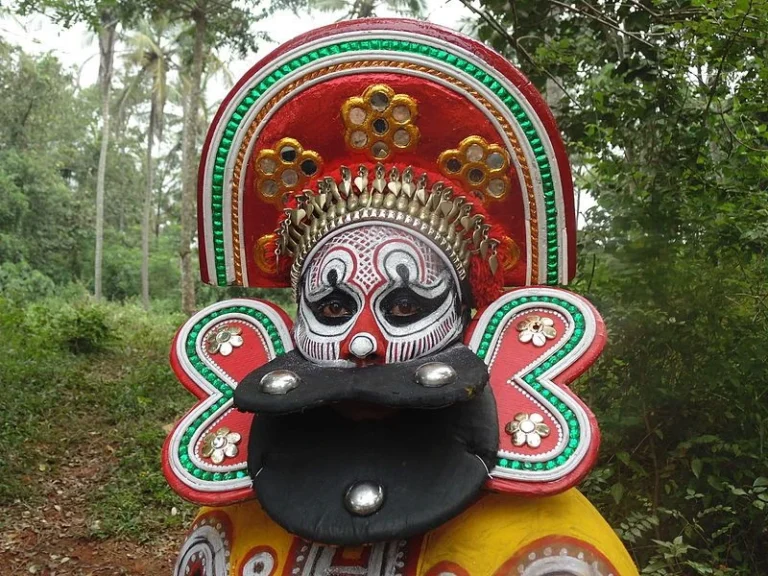
- 🎨 Intricate face art: Natural colors, symbolic designs
- 🙏 Direct blessing: People interact with the “god” face-to-face
👑 Types of Theyyam (Popular Forms)
- Kandanar Kelan Theyyam – famous for fire rituals 🔥
- Muchilottu Bhagavathi – powerful goddess form 👸
- Gulikan Theyyam – associated with death & justice ⚖️
- Pottan Theyyam – symbol of social equality ✊
🕉️ Ritual Process (Step-by-Step)
- Preparation (Aniyara) – sacred makeup & costume
- Invocation – drums (Chenda) begin the ritual
- Transformation – performer enters trance
- Performance – dance, fire, storytelling
- Blessings – devotees receive guidance
📍 Where to Experience Theyyam
- Kannur
- Kasaragod
- Small village temples (Kavu)
🗓️ Season: October to May
2.THIRA
What is Thira?
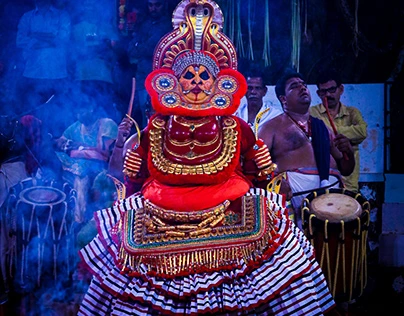
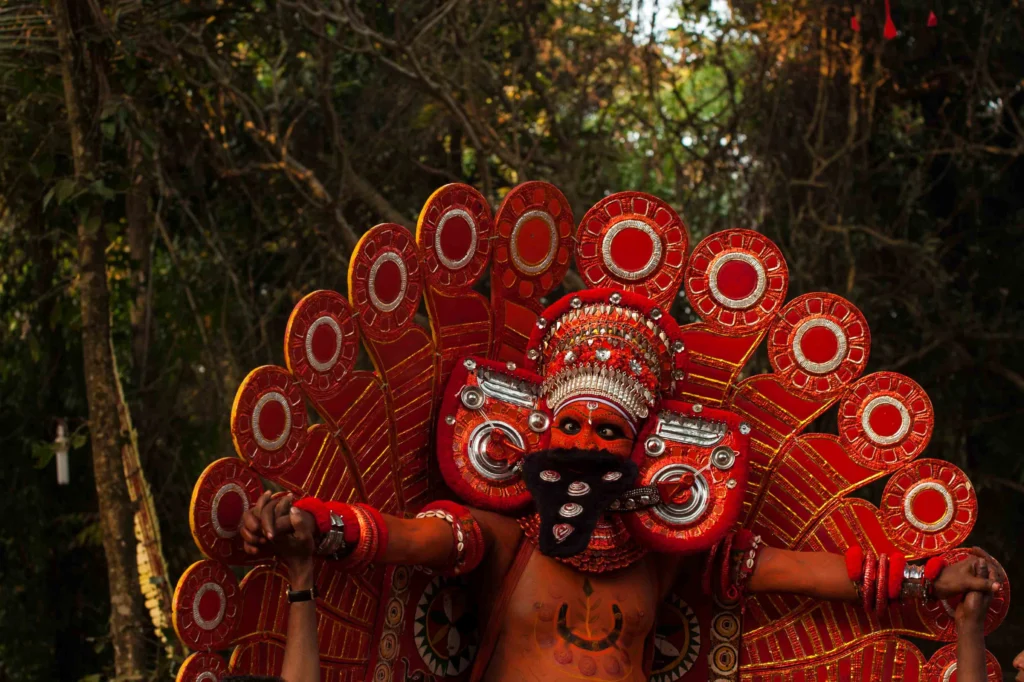
Thira is a sacred ritual dance performed in honor of Goddess Bhagavathi, mainly in North Kerala.
It is not just a performance — it is a devotional act where the performer connects with divine energy through rhythm, movement, and ritual.
Spiritual Meaning
- Represents devotion to the Goddess
- Seen as a medium between humans and divine power
- Every movement is a form of prayer
- Strong connection with village traditions and temple culture
Key Features
- Traditional Face Art – symbolic and spiritual designs
- Chenda Melam – powerful drum beats create energy
- Fire Elements – used in certain ritual moments
- Temple Setting (Kavu) – natural sacred spaces
Ritual Flow
- Preparation – sacred dressing & makeup
- Invocation – drums begin, atmosphere builds
- Dance – rhythmic circular steps around temple
- Divine Phase – spiritual connection deepens
- Blessings – devotees receive grace
Where to Experience
- Kannur
- Kozhikode
- Village Kavus (sacred groves)
🗓️ Season: December – April
3.KATHAKALI
What is Kathakali?
Kathakali is a classical dance drama from Kerala, known for its powerful storytelling and dramatic expressions.
It is not just a performance — it is a visual storytelling experience where actors bring mythological stories to life without speaking.
The word Kathakali comes from “Katha” (story) and “Kali” (play).
Performers communicate through facial expressions, hand gestures, and body movements.
🔥 Why Kathakali is Unique
🎭 No dialogue — pure expression: Stories told through face and gestures
👁️ Eye control mastery: Every eye movement has meaning
🎨 Elaborate makeup: Natural pigments and symbolic colors
👑 Grand costumes: Heavy skirts and massive headgear
🥁 Live music: Chenda and Maddalam create intense rhythm
👑 Types of Kathakali Characters (Vesham)
🟢 Pacha (Green) – noble heroes like Rama and Krishna
🔴 Kathi (Knife) – villains with arrogance and ego
🧔 Tadi (Beard) – fierce and powerful characters
⚫ Kari (Black) – demonic and evil forms
✨ Minukku – soft and gentle roles like women and sages
🕉️ Performance Process (Step-by-Step)
Preparation (Makeup Room) – hours of detailed makeup and costume
Invocation – drums begin and stage is set
Introduction – characters appear slowly
Performance – storytelling through dance and expressions
Conclusion – moral or message revealed
📖 Story Themes
Ramayana
Mahabharata
Puranic legends
Most stories focus on the battle between good and evil.
📍 Where to Experience Kathakali
Kerala Kalamandalam
Kochi cultural centers
Temple festivals
Tourist performance venues
🗓️ Season: Performed throughout the year
4.Mohiniyattam
What is Mohiniyattam?
Mohiniyattam is a classical dance form from Kerala, known for its soft, graceful, and feminine movements.
It is not just a performance — it is an expression of beauty, emotion, and devotion.
The word Mohiniyattam comes from “Mohini” (enchantress) and “Attam” (dance).
It reflects the charm and elegance of the mythical Mohini avatar of Lord Vishnu.
🔥 Why Mohiniyattam is Unique
🌿 Soft and flowing movements: Gentle sways and circular steps
👁️ Expressive storytelling: Emotions shown through subtle expressions
🎨 Minimal yet elegant makeup: Natural beauty with emphasis on eyes
👑 Traditional costume: White saree with golden border (Kasavu)
🎶 Carnatic music base: Slow, soothing rhythm
👑 Key Features
💃 Lasya Style – feminine and graceful dance form
👀 Abhinaya (Expression) – focus on emotions and storytelling
🌀 Circular Movements – smooth and flowing body patterns
🎵 Music & Rhythm – soft beats with instruments like Mridangam and Veena
🕉️ Performance Structure (Step-by-Step)
Cholkettu – invocation and beginning
Jatiswaram – pure dance movements
Varnam – combination of dance and expression
Padam – emotional storytelling
Tillana – rhythmic and energetic ending
📖 Themes
Love and devotion
Stories of Krishna and Vishnu
Feminine emotions and beauty
Spiritual expression
📍 Where to Experience Mohiniyattam
Kerala Kalamandalam
Temple festivals
Cultural programs across Kerala
Classical dance stages in India
🗓️ Season: Performed throughout the year
5.Yakshagana
What is Yakshagana?
Yakshagana is a traditional folk theatre from Karnataka, famous for its energetic dance, music, and dramatic storytelling.
It is not just a performance — it is a powerful blend of dance, dialogue, and live narration.
The word Yakshagana means “songs of celestial beings (Yakshas).”
Performers act, dance, and speak dialogues to bring epic stories alive.
🔥 Why Yakshagana is Unique
🎭 Live dialogue + acting: Unlike silent forms, actors speak on stage
🔥 High energy performance: Fast movements and powerful expressions
🎨 Bold makeup: Bright colors and exaggerated facial designs
👑 Giant costumes: Heavy ornaments and massive headgear
🥁 Loud live music: Drums and singers control the rhythm
👑 Key Elements
🎤 Bhagavata (Singer) – narrates the story live
💃 Himmela (Musicians) – provide music and rhythm
🎭 Mummela (Actors) – perform dance and dialogue
🥁 Instruments – Chande, Maddale, and Harmonium
🕉️ Performance Process (Step-by-Step)
Preparation – makeup and costume setup
Invocation – music begins with drum beats
Entry – characters enter with dramatic moves
Performance – dance, dialogue, and storytelling
Climax – intense battle or emotional peak
📖 Story Themes
Ramayana
Mahabharata
Puranas
Stories focus on heroism, devotion, and the fight between good and evil.
📍 Where to Experience Yakshagana
Karnataka (Udupi, Mangalore, Dakshina Kannada)
Temple festivals
Village night performances
🗓️ Season: November to May
6.Dollu Kunitha
What is Dollu Kunitha?
Dollu Kunitha is a traditional folk dance from Karnataka, known for its powerful drum beats and synchronized group performance.
It is not just a dance — it is a high-energy ritual performance dedicated to devotion and unity.
The word “Dollu” means drum, and “Kunitha” means dance.
Performers dance while playing large drums tied around their bodies.
🔥 Why Dollu Kunitha is Unique
🥁 Live drumming + dance: Performers play and dance at the same time
🔥 High energy movements: Fast steps and strong body coordination
👥 Group synchronization: Perfect timing between dancers
🎭 Traditional attire: Simple yet striking costumes
⚡ Loud rhythmic beats: Creates a powerful atmosphere
👑 Key Features
💪 Physical Strength – requires stamina and coordination
🥁 Dollu (Drum) – main instrument carried by performers
👣 Rhythmic Steps – fast and synchronized movements
👥 Team Performance – usually performed in groups
🕉️ Performance Process (Step-by-Step)
Preparation – tying drums and costume setup
Invocation – rhythm begins slowly
Build-up – speed and intensity increase
Climax – fast, powerful synchronized moves
Ending – rhythmic conclusion
📖 Themes
Devotion to Lord Beereshwara
Cultural celebration
Unity and discipline
Energy and strength
📍 Where to Experience Dollu Kunitha
Karnataka (especially rural regions)
Temple festivals
Cultural events and celebrations
🗓️ Season: Festival-based (year-round)
7.Bhangra
What is Bhangra?
Bhangra is a vibrant folk dance from Punjab, India, known for its high energy and joyful movements.
It is not just a dance — it is a celebration of life, harvest, and happiness.
Originally, Bhangra was performed during the harvest festival of Vaisakhi.
Today, it is popular worldwide as a symbol of Punjabi culture.
🔥 Why Bhangra is Unique
🥁 Dhol beats: Powerful drum rhythms drive the dance
🔥 High energy moves: Jumps, kicks, and fast steps
🎨 Bright costumes: Colorful outfits with turbans
😄 Joyful expressions: Smiles and celebration mood
🌍 Global popularity: Performed across the world
👑 Key Features
💃 Energetic Movements – jumps, shoulder shrugs, kicks
🥁 Dhol (Drum) – main instrument controlling rhythm
👥 Group Dance – often performed in teams
🎶 Folk Music – traditional Punjabi songs
🕉️ Performance Process (Step-by-Step)
Preparation – traditional costume and group setup
Start – dhol beats begin
Build-up – dancers increase energy and speed
Climax – peak energy with jumps and formations
Ending – joyful finish with group celebration
📖 Themes
Harvest and farming life
Joy and celebration
Community bonding
Punjabi culture and pride
📍 Where to Experience Bhangra
Punjab (India)
Vaisakhi festival celebrations
Cultural events worldwide
College fests and competitions
🗓️ Season: April (Vaisakhi) + year-round performances
8.Giddha
What is Giddha?
Giddha is a traditional folk dance from Punjab, performed mainly by women.
It is not just a dance — it is a lively expression of emotions, stories, and everyday life.
Giddha is closely connected to Punjabi culture and is often performed during festivals and celebrations.
Dancers sing boliyan (folk verses) while performing.
🔥 Why Giddha is Unique
🎤 Singing + dancing: Performers sing boliyan while dancing
😊 Expressive storytelling: Shows daily life, humor, and emotions
🎨 Colorful attire: Salwar kameez with bright dupattas
👥 Circular formation: Group dance with strong coordination
💃 Graceful movements: Claps, spins, and rhythmic steps
👑 Key Features
🎶 Boliyan (Folk Verses) – short, witty songs sung during dance
👏 Clapping Rhythm – beats created by hand claps
👥 Group Performance – dancers perform in circles
💃 Expressive Moves – focus on gestures and expressions
🕉️ Performance Process (Step-by-Step)
Preparation – traditional dress and group setup
Start – one dancer begins a boli (verse)
Response – group repeats and joins
Dance – clapping, spinning, and expressive moves
Flow – continues with different boliyan
📖 Themes
Love and relationships
Humor and social life
Women’s experiences
Festivals and celebrations
📍 Where to Experience Giddha
Punjab (India)
Festivals like Vaisakhi and weddings
Cultural events and college fests
🗓️ Season: Year-round (especially festivals)
9.Garba
What is Garba?
Garba is a traditional folk dance from Gujarat, India, performed in circular formations around a lamp or idol.
It is not just a dance — it is a devotional celebration dedicated to Goddess Durga.
The word Garba comes from “Garbha” (womb), symbolizing life and creation.
Dancers move in circles, representing the cycle of life.
🔥 Why Garba is Unique
🪔 Circle dance: Performed around a lamp (symbol of divine energy)
🙏 Devotional roots: Dedicated to Goddess Durga during Navratri
🎨 Colorful costumes: Chaniya choli and kediyu outfits
🥁 Rhythmic claps: Simple yet energetic beats
🌙 Night celebrations: Performed for multiple nights
👑 Key Features
👏 Clapping Patterns – rhythmic hand movements
🌀 Circular Formation – dancers move in coordinated circles
🎶 Folk Music – traditional Garba songs and beats
💃 Grace + Energy – balance of elegance and excitement
🕉️ Performance Process (Step-by-Step)
Preparation – traditional attire and group setup
Start – slow rhythm with claps
Build-up – speed and energy increase
Climax – fast circular movements
Ending – devotional closure
📖 Themes
Devotion to Goddess Durga
Celebration of life
Community bonding
Feminine energy and power
📍 Where to Experience Garba
Gujarat (India)
Navratri festival (main celebration)
Cultural events across India
🗓️ Season: Navratri (September–October)
10.Dandiya Raas
What is Dandiya Raas?
Dandiya Raas is a vibrant folk dance from Gujarat, performed using decorated wooden sticks called dandiyas.
It is not just a dance — it is a rhythmic celebration of devotion, energy, and community bonding.
The dance is closely associated with the Navratri festival and symbolizes the fight between good and evil.
🔥 Why Dandiya Raas is Unique
🥢 Stick dance: Dancers strike sticks in rhythm
🔥 Fast-paced movements: Energetic and lively steps
👫 Pair-based dance: Performed in couples or groups
🎨 Colorful costumes: Traditional festive attire
🥁 Musical beats: Folk songs and rhythmic patterns
👑 Key Features
🥢 Dandiyas (Sticks) – main element of the dance
👥 Group & Pair Dance – dancers rotate partners
🌀 Circular Patterns – coordinated group formations
🎶 Folk Music – lively Garba and Raas songs
🕉️ Performance Process (Step-by-Step)
Preparation – dress up and hold dandiyas
Start – slow rhythm with basic steps
Build-up – faster stick movements
Climax – high-speed rotations and partner changes
Ending – festive and joyful closure
📖 Themes
Victory of good over evil
Devotion to Goddess Durga
Celebration and unity
Festive joy
📍 Where to Experience Dandiya Raas
Gujarat (India)
Navratri festival celebrations
Cultural events across India and abroad
🗓️ Season: Navratri (September–October)
11.Lavani
What is Lavani?
Lavani is a traditional folk dance from Maharashtra, known for its powerful rhythm, expressive storytelling, and bold performance style.
It is not just a dance — it is a blend of music, poetry, and emotion performed on stage.
The word Lavani comes from “Lavanya,” meaning beauty.
It combines strong expressions with fast-paced movements and engaging lyrics.
🔥 Why Lavani is Unique
🥁 Dholki beats: Fast and energetic drum rhythms
🎭 Expressive storytelling: Strong facial expressions and emotions
🎨 Traditional costume: Nauvari saree worn in a unique style
🎤 Singing + dance: Performed with live or recorded songs
🔥 Powerful stage presence: Bold and confident performance
👑 Key Features
💃 Fast Rhythmic Steps – energetic footwork and spins
👀 Abhinaya (Expression) – focus on emotions and storytelling
🥁 Dholki (Drum) – main instrument driving the rhythm
🎶 Lavani Songs – poetic and expressive lyrics
🕉️ Performance Process (Step-by-Step)
Preparation – costume, makeup, and stage setup
Start – dholki rhythm begins
Performance – expressive dance with storytelling
Climax – high-energy fast movements
Ending – dramatic and engaging finish
📖 Themes
Love and romance
Social issues and satire
Beauty and emotion
Cultural storytelling
📍 Where to Experience Lavani
Maharashtra (India)
Folk theatre (Tamasha) stages
Cultural festivals and events
🗓️ Season: Year-round performances
12.Tamasha
What is Tamasha?
Tamasha is a traditional folk theatre form from Maharashtra, known for its lively mix of dance, music, and drama.
It is not just a performance — it is a full entertainment experience combining humor, storytelling, and expressive art.
The word “Tamasha” means show or entertainment.
It blends dialogue, songs, and dance to engage the audience.
🔥 Why Tamasha is Unique
🎭 Mix of drama + dance + music: Complete stage entertainment
😂 Humor and satire: Strong focus on comedy and social themes
💃 Lavani performances: A key highlight of Tamasha
🥁 Live music: Dholki and other instruments create rhythm
🎤 Dialogue delivery: Actors interact with audience
👑 Key Elements
🎤 Shahir (Narrator) – leads the storytelling
💃 Lavani Dance – central attraction
🎭 Actors & Comedians – perform drama and humor
🥁 Musicians – create live rhythmic background
🕉️ Performance Process (Step-by-Step)
Preparation – stage and costume setup
Opening – musical introduction
Entry – characters introduced with dialogue
Performance – mix of comedy, dance, and drama
Climax – emotional or humorous peak
Ending – engaging conclusion
📖 Themes
Love and relationships
Social satire
Politics and society
Entertainment and humor
📍 Where to Experience Tamasha
Maharashtra (India)
Rural theatre stages
Cultural festivals and folk events
🗓️ Season: Year-round performances
13.Nautanki
What is Nautanki?
Nautanki is a traditional folk theatre from North India, known for its energetic storytelling and musical drama.
It is not just a performance — it is a lively stage experience where actors narrate stories through songs, dialogue, and expressive acting.
The word Nautanki is believed to be linked to a popular folk tale heroine “Nautanki” or derived from theatrical traditions of North India.
Performers communicate using singing, dialogue delivery, gestures, and dramatic movements.
🔥 Why Nautanki is Unique
🎭 Music + Dialogue mix: Story told through songs and spoken lines
🎤 Powerful singing: High-pitched, emotional vocal style
🎨 Bright costumes: Colorful dresses and bold stage presence
🥁 Live instruments: Dholak, harmonium, nagada create rhythm
🔥 Dramatic acting: Exaggerated expressions to engage audience
👑 Types of Nautanki Characters
👑 Nayak (Hero) – brave and righteous male lead
👸 Nayika (Heroine) – romantic or emotional female lead
😈 Khalnayak (Villain) – evil, greedy, or arrogant character
😂 Vidushak (Clown) – comic relief and entertainment
🧙 Supporting roles – kings, queens, saints, soldiers
🕉️ Performance Process (Step-by-Step)
Preparation – Stage setup, costumes, and music arrangement
Opening Song – Musical beginning to attract audience
Introduction – Characters enter with dramatic style
Performance – Story unfolds through songs and dialogue
Climax – Conflict between hero and villain
Conclusion – Moral lesson or message delivered
📖 Story Themes
❤️ Love stories (Laila–Majnu type)
⚔️ Heroic and historical tales
🕉️ Mythological stories
⚖️ Social issues (justice, morality, society)
📍 Where to Experience Nautanki
Uttar Pradesh villages and towns
Rajasthan rural fairs
Haryana cultural events
Melas (village festivals) and traditional gatherings
🗓️ Season
Performed mostly during fairs, festivals, and special community events throughout the year
14.Chhau
What is Chhau?
Chhau is a traditional dance-drama from Eastern India, known for its martial movements, masks, and storytelling.
It is not just a dance — it is a powerful performance where dancers express stories through body movements, expressions, and symbolic gestures.
The word “Chhau” is believed to come from terms meaning mask, shadow, or stealth.
Performers communicate using vigorous steps, acrobatics, and stylized choreography, often without spoken dialogue.
🔥 Why Chhau is Unique
🎭 Martial art influence: Movements inspired by combat techniques
😷 Mask tradition: Elaborate masks (especially in Purulia & Seraikella styles)
💪 Athletic performance: Jumps, spins, and acrobatics
🎨 Colorful costumes: Decorative and symbolic outfits
🥁 Live music: Dhol, dhamsa, shehnai create energetic rhythm
👑 Types of Chhau Styles
🎭 Odisha (Mayurbhanj Chhau) – No masks, focus on facial expression
😷 West Bengal (Purulia Chhau) – Bright masks and dramatic style
🎨 Jharkhand (Seraikella Chhau) – Subtle masks and refined movements
🕉️ Performance Process (Step-by-Step)
Preparation – Costume, mask creation, and rehearsal
Invocation – Musical start with traditional instruments
Entry – Dancers enter with strong movements
Performance – Story unfolds through dance and action
Climax – Intense battle or dramatic moment
Conclusion – Moral or symbolic message
📖 Story Themes
🕉️ Ramayana
🕉️ Mahabharata
⚔️ Mythological battles
🌿 Nature and tribal traditions
📍 Where to Experience Chhau
Odisha cultural festivals
West Bengal (Purulia region)
Jharkhand (Seraikella region)
National cultural festivals across India
🗓️ Season
Mostly performed during spring festivals like Chaitra Parva and regional celebrations throughout the year
15.Jatra
Jatra is a traditional folk theatre from Eastern India, especially popular in West Bengal and Bangladesh.
It is not just a performance — it is a loud, dramatic stage experience where actors narrate stories through dialogue, music, and powerful expressions.
The word “Jatra” means journey or procession, originally linked to religious processions and later evolved into theatrical storytelling.
Performers communicate using high-energy acting, emotional dialogue, and musical narration.
🔥 Why Jatra is Unique
🎭 Loud dialogue delivery: Strong, emotional, and theatrical voice
🎤 Music + drama mix: Songs combined with intense acting
🔥 Exaggerated acting: Big gestures to reach large audiences
🎨 Simple stage setup: Open-air theatre with minimal props
👥 Audience engagement: Direct interaction with viewers
👑 Types of Jatra Characters
👑 Hero (Nayak) – brave and moral protagonist
👸 Heroine (Nayika) – emotional or romantic lead
😈 Villain (Khalnayak) – negative and powerful character
😂 Comic roles – humor and entertainment
🧙 Supporting roles – kings, saints, common people
🕉️ Performance Process (Step-by-Step)
Preparation – Stage setup and costume arrangement
Opening Song – Musical beginning to gather audience
Introduction – Characters enter with dramatic style
Performance – Story unfolds through dialogue and songs
Climax – Emotional or action-packed peak
Conclusion – Moral lesson or message
📖 Story Themes
🕉️ Mythological stories (Ramayana, Mahabharata)
⚔️ Historical and political stories
❤️ Social and family dramas
⚖️ Contemporary issues and awareness
📍 Where to Experience Jatra
West Bengal rural and urban areas
Bangladesh cultural regions
Village fairs (melas) and seasonal festivals
🗓️ Season
Mostly performed during winter season and festival times, especially in rural areas
16.Bihu Dance
What is Bihu Dance?
Bihu Dance is a vibrant folk dance from Assam, known for its joyful movements, rhythmic music, and celebration of life.
It is not just a dance — it is a festival expression where people celebrate nature, love, and the agricultural cycle.
The dance is closely associated with the Bihu festivals, especially Rongali Bihu (spring festival).
Performers express emotions through energetic steps, hand gestures, and body movements.
🔥 Why Bihu Dance is Unique
💃 Energetic movements: Fast steps and graceful body rhythms
❤️ Expression of love: Youth celebrate romance and joy
🎨 Traditional attire: Mekhela Chador (women), Dhoti-Gamusa (men)
🥁 Live music: Dhol, pepa (buffalo horn), gogona create rhythm
🌿 Nature connection: Celebrates harvest and seasonal change
👑 Types of Bihu
🌸 Rongali Bihu (Bohag Bihu) – Spring festival, most vibrant dance
🌾 Bhogali Bihu (Magh Bihu) – Harvest festival, feasting and joy
🍂 Kongali Bihu (Kati Bihu) – Spiritual and simple observance
🕉️ Performance Process (Step-by-Step)
Preparation – Traditional dress and musical setup
Opening Beat – Dhol and pepa start the rhythm
Entry – Dancers join in groups with coordinated steps
Performance – Fast movements, gestures, and expressions
Climax – High-energy group dance
Conclusion – Celebration and community bonding
📖 Themes
❤️ Love and romance
🌿 Nature and seasons
🌾 Agriculture and harvest
😊 Joy, youth, and community life
📍 Where to Experience Bihu Dance
Assam villages and cities
Cultural festivals across India
Community celebrations during Bihu
🗓️ Season
Mainly performed during Rongali Bihu (April) and other Bihu festivals throughout the year
17.Rouf
What is Rouf?
Rouf (Rauf) is a graceful folk dance from Jammu and Kashmir, performed mainly by women during festivals and celebrations.
It is not just a dance — it is a cultural expression of joy, unity, and tradition.
The dance is especially performed during Eid and springtime celebrations.
Performers express emotions through slow, synchronized steps, gentle movements, and rhythmic clapping.
🔥 Why Rouf is Unique
👭 Group formation: Women stand in two rows facing each other
🎶 No instruments: Rhythm created through singing and clapping
🌸 Graceful movements: Soft steps with coordinated body flow
👗 Traditional attire: Pheran with beautiful headscarves
🤝 Unity and bonding: Symbol of togetherness and harmony
👑 Types of Rouf Performance
🌙 Festival Rouf – Performed during Eid celebrations
🌸 Spring Rouf – Celebrating seasonal joy and nature
🎉 Cultural Rouf – Presented in events and stage programs
🕉️ Performance Process (Step-by-Step)
Preparation – Traditional dress and group arrangement
Opening Song – Women begin singing in rhythm
Formation – Two lines facing each other
Performance – Synchronized steps with clapping and swaying
Climax – Increased rhythm and coordinated movement
Conclusion – Ends with harmony and group unity
📖 Themes
🌸 Nature and seasons
❤️ Love and emotions
🕌 Religious and festive joy
🤝 Unity and community bonding
📍 Where to Experience Rouf
Jammu and Kashmir villages and cultural events
Local festivals and celebrations
Traditional gatherings and performances
🗓️ Season
Mostly performed during Eid festivals and spring season