

Introduction
Karkidakamasam, often referred to as the “Ramayana Month” in Kerala, is one of the most spiritually significant periods in the Malayalam calendar. Falling between July and August, this monsoon month is associated with deep-rooted traditions, healing practices, and rich folklore beliefs that have been passed down for generations.
While it is considered an inauspicious time for material beginnings, Karkidakamasam is highly sacred for spiritual growth, self-reflection, and cultural rituals.
What is Karkidakamasam?
Karkidakamasam is the last month of the Malayalam calendar, marking a transitional phase before the new year begins with Chingam. It coincides with heavy monsoon rains, symbolizing cleansing, renewal, and introspection.
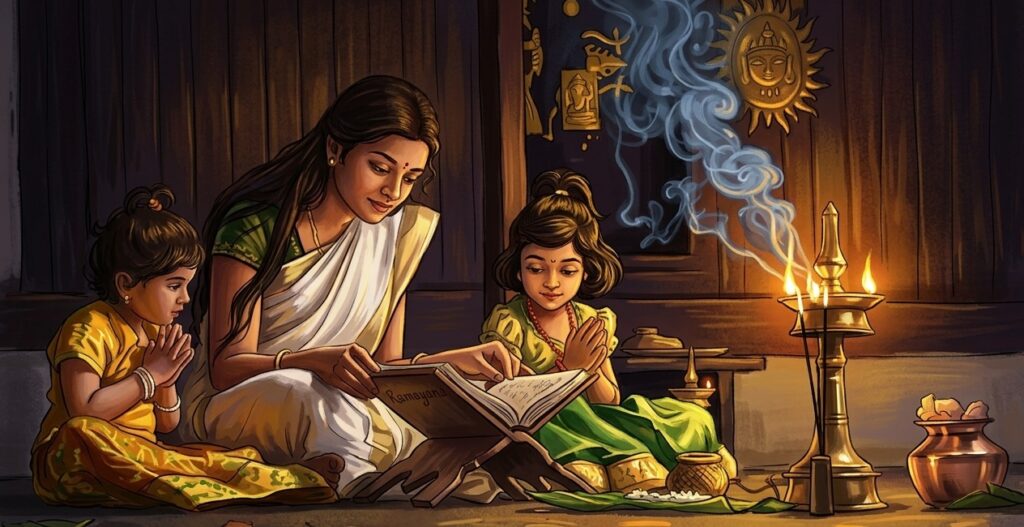
In traditional Kerala households, this month is dedicated to prayers, Ayurvedic rejuvenation, and the reading of the Ramayana.
Folklore Significance of Karkidakamasam
Kerala folklore considers Karkidakamasam a time when negative energies are stronger due to the harsh climate and isolation caused by monsoon rains.
Key Folklore Beliefs:
- Spirits and unseen forces are believed to be more active
- People avoid starting new ventures or major journeys
- Homes are spiritually protected through rituals and chants
- Lamps and sacred texts are used to invite positive energy
These beliefs highlight how folklore blends nature, spirituality, and human psychology.
Ramayana Month Tradition
One of the most important customs during Karkidakamasam is the daily recitation of the Adhyatma Ramayanam.
Practices Include:
- Reading Ramayana at home every evening
- Lighting traditional lamps (Nilavilakku)
- Family gatherings for prayer and storytelling
- Temple visits and devotional singing
This practice strengthens moral values, unity, and spiritual awareness within families.
Ayurvedic Practices (Karkidaka Chikitsa)
Karkidakamasam is also known for its unique Ayurvedic healing rituals. The monsoon season is considered ideal for detoxification and rejuvenation treatments.
Common Practices:
- Consuming Karkidaka Kanji (medicated porridge)
- Herbal oil massages (Abhyangam)
- Steam therapies and detox treatments
- Immunity-boosting herbal medicines
These practices aim to restore balance in the body and prepare it for the upcoming year.
Cultural Rituals and Daily Practices
Karkidakamasam brings a disciplined lifestyle rooted in simplicity and devotion.
Daily Cultural Practices:
- Early morning prayers and chanting
- Avoiding non-vegetarian food in many households
- Maintaining cleanliness and spiritual purity
- Observing fasting and dietary control
These habits reflect a holistic approach to mental, physical, and spiritual well-being.
Karkidaka Vavu Bali
Karkidaka Vavu Bali is an important ritual performed during this month to honor ancestors.
Ritual Highlights:
- Offerings made on riverbanks or seashores
- Prayers for ancestral blessings
- Conducted by priests or family elders
This tradition reflects the deep respect for lineage and ancestral connections in Kerala culture.
Symbolism Behind Karkidakamasam
Karkidakamasam is more than just a month—it is a symbolic period of transformation.
- Rain represents purification
- Darkness symbolizes introspection
- Prayer signifies spiritual awakening
- Healing rituals indicate renewal
It teaches the importance of slowing down, reflecting, and preparing for new beginnings.
Modern Relevance of Karkidakamasam
Even in today’s fast-paced world, Karkidakamasam holds relevance. Many people are rediscovering its benefits through Ayurveda, mindfulness, and traditional practices.
Why It Still Matters:
- Promotes mental peace and emotional balance
- Encourages family bonding
- Supports natural healing methods
- Preserves Kerala’s cultural heritage
Conclusion
Karkidakamasam is a beautiful blend of folklore, spirituality, and cultural wisdom. It reminds us to pause, reconnect with traditions, and embrace a holistic lifestyle.
From Ramayana recitations to Ayurvedic healing and ancestral rituals, every aspect of this month reflects Kerala’s deep-rooted heritage and timeless knowledge.
By understanding and practicing these traditions, we not only preserve folklore but also bring balance and meaning into our modern lives.