
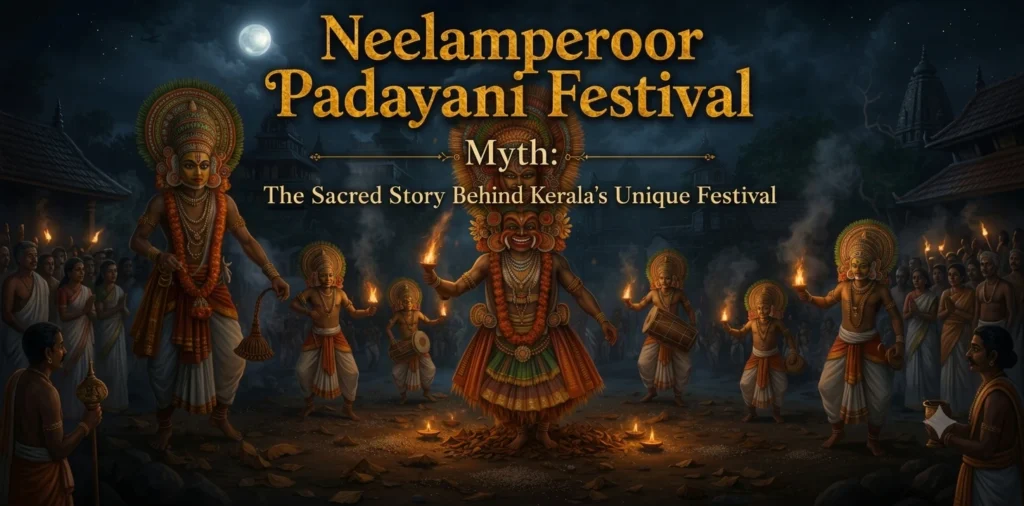
Neelamperoor Padayani is one of Kerala’s most fascinating traditional festivals. Celebrated at the Neelamperoor Palli Bhagavathi Temple in Alappuzha district, the festival is famous for its colourful and unusual ritual performances. Unlike many other temple festivals, Neelamperoor Padayani is deeply connected with ancient myths, goddess worship, local beliefs, and symbolic representations of divine beings.
The festival is especially known for its spectacular Padayani kolams, including representations of animals, birds, divine figures, and mythical characters. Among these, the famous Kettukazcha and Padayani traditions attract devotees and cultural enthusiasts from different parts of Kerala.
But what is the myth behind Neelamperoor Padayani? The answer lies in ancient stories connected with Goddess Bhadrakali, divine power, and the victory of good over evil.
The Myth Behind Neelamperoor Padayani
According to local beliefs and traditional stories, the festival is connected with the worship of Bhagavathi, the powerful mother goddess. In Kerala’s folk traditions, Bhagavathi is often associated with Bhadrakali, a fierce form of the Goddess who protects devotees and destroys evil forces.
The myth represents the eternal struggle between divine power and negative forces. Bhadrakali is believed to have appeared in a powerful form to destroy evil and restore balance to the world. The rituals and performances of Padayani symbolically celebrate this divine energy.
The colourful figures created during the festival represent different forms of nature, animals, supernatural beings, and divine powers. Each figure carries a symbolic meaning and connects the community with Kerala’s ancient spiritual traditions.
The Story of Goddess Bhadrakali
In Kerala mythology, Goddess Bhadrakali is considered a powerful protector. She is often connected with the story of the destruction of the demon Darika. According to popular Hindu mythology, Darika was a powerful demon who received special blessings and became difficult to defeat.
As Darika’s cruelty increased, the gods sought the help of divine power. Goddess Kali appeared in a fierce form and fought against the demon. After a powerful battle, she defeated Darika and restored peace.
This story of the victory of good over evil is reflected in many Kerala temple rituals, including Padayani traditions. At Neelamperoor, the ritual performances and symbolic figures celebrate divine strength, protection, and the power of Bhagavathi.
Why Are Animals and Birds Important in Neelamperoor Padayani?
One of the most interesting features of Neelamperoor Padayani is the use of large and colourful representations of animals and birds. These figures are not simply decorative. They reflect Kerala’s deep connection with nature and folk beliefs.
In traditional culture, animals and birds often represent:
- Divine messengers
- Natural powers
- Protection
- Fertility and prosperity
- The relationship between humans and nature
The performers carry these large ritual structures and move through the temple surroundings. The visual performance creates a powerful atmosphere filled with music, rhythm, devotion, and community participation.
The Famous Swan Figures
The swan, locally associated with sacred symbolism, is one of the most recognisable elements connected with Neelamperoor Padayani traditions. In Indian mythology, the swan often represents purity, wisdom, and spiritual knowledge.
The beautiful bird-shaped ritual structures create a unique visual identity for the festival. Their appearance reflects the artistic creativity of local communities and the survival of traditional craftsmanship.
For generations, local artists and devotees have preserved these traditions through handmade structures, performances, and rituals.
Padayani as a Folk Ritual
Padayani is more than a festival performance. It is a form of folk ritual theatre that combines mythology, dance, music, art, and spirituality.
Traditional Padayani performances often include:
- Colourful ritual masks and figures
- Drumming and traditional music
- Mythological characters
- Goddess worship
- Community participation
- Symbolic representations of nature
The performers become part of a sacred ritual rather than simply entertaining an audience. Every movement, costume, and figure contributes to the spiritual atmosphere of the festival.
The Connection Between Myth and Community
The myth of Neelamperoor Padayani continues to live because of the local community. The stories are passed from one generation to another through temple rituals, oral traditions, and cultural performances.
For many devotees, the festival is an opportunity to seek blessings from Bhagavathi. For artists, it is a way to preserve traditional craftsmanship. For younger generations, it becomes a connection with Kerala’s cultural identity.
This is why festivals like Neelamperoor Padayani are important. They preserve stories that may not always exist in written history.
The Symbolism of Neelamperoor Padayani
The festival can be understood as a celebration of several powerful ideas.
Victory of Good Over Evil
The connection with Bhadrakali represents the destruction of negative forces and the restoration of balance.
Power of the Mother Goddess
Bhagavathi is worshipped as a protector who provides strength and blessings to her devotees.
Connection With Nature
The use of birds and animals reflects the importance of nature in Kerala’s folk culture.
Community Unity
The festival brings together artists, devotees, families, and local communities.
Preservation of Folk Traditions
The ritual protects traditional art forms and keeps ancient myths alive.
Why Is Neelamperoor Padayani Important to Kerala Folklore?
Kerala folklore is filled with stories of gods, goddesses, spirits, heroes, animals, and supernatural powers. Neelamperoor Padayani brings many of these elements together in a living cultural tradition.
Unlike a story that exists only in a book, Padayani allows people to see, hear, and experience mythology. The sounds of traditional drums, the movement of performers, and the colourful ritual structures transform ancient beliefs into a powerful cultural experience.
The festival also shows how mythology can survive through community traditions. Even as Kerala continues to modernise, rituals like Neelamperoor Padayani keep the connection between people and their cultural roots alive.
How to Reach Neelamperoor Padayani
Neelamperoor Padayani is held at the Palli Bhagavathi Temple, Neelamperoor, in the Kuttanad region of Alappuzha district, Kerala.
By Train 🚆
The nearest major railway station is Changanassery Railway Station, located about 10 km from the temple. From the station, visitors can take a taxi, auto-rickshaw, or local transport to Neelamperoor.
By Air ✈️
The nearest airport is Cochin International Airport, approximately 101 km away. From the airport, visitors can hire a taxi or travel by road toward Neelamperoor.
By Road 🚌
Neelamperoor is accessible by road from nearby towns such as Changanassery and Kottayam. Kerala Tourism lists the festival venue at Palli Bhagavathi Temple on the Kurichy–Eara–Kavalam Road, Neelamperoor.
Location
Palli Bhagavathi Temple
Travel Tip: The Padayani festival attracts large crowds, so it is best to plan your journey early and arrange return transportation in advance.
Conclusion
The Neelamperoor Padayani myth is deeply connected with Kerala’s ancient traditions of goddess worship, divine protection, nature symbolism, and folk rituals. The stories surrounding Bhagavathi and Bhadrakali represent the victory of positive forces over evil.
The colourful birds, animals, and ritual figures seen during the festival are powerful symbols of Kerala’s artistic and spiritual heritage. Neelamperoor Padayani is not just a celebration—it is a living example of how mythology, folklore, faith, and community come together.
Through every drumbeat, ritual figure, and traditional performance, the ancient spirit of Kerala folklore continues to live.