
Onam is one of the most important festivals celebrated in Kerala. It brings families, communities, and people from different backgrounds together through food, celebrations, games, music, and cultural traditions.
But why do Keralites celebrate Onam?
The festival is closely connected with the legendary King Mahabali, who is remembered as a kind and beloved ruler. According to Kerala’s traditional stories, Mahabali’s reign was a golden age when people lived happily, peacefully, and equally.
Onam celebrates the annual return of Mahabali to Kerala. At the same time, it represents values such as prosperity, togetherness, gratitude, equality, and cultural identity.
What Is Onam?
Onam is a harvest festival celebrated mainly in Kerala during the Malayalam month of Chingam, usually falling between August and September.
The festival lasts for several days, with Thiruvonam considered the most important day. Families prepare traditional meals, decorate their homes with flower carpets, wear new clothes, visit relatives, and participate in cultural activities.
Although Onam has strong connections with Hindu mythology, the festival has developed into a cultural celebration enjoyed by Keralites across communities.
The History Behind Onam
The most famous story associated with Onam is the legend of King Mahabali, also known as Maveli.
Mahabali was believed to be a powerful and generous king. Under his rule, Kerala was said to have experienced extraordinary prosperity. People were treated equally, poverty was rare, and the kingdom was peaceful.
Traditional folklore describes his reign as a time when people had little reason to fear or suffer. This idealized kingdom became an important part of Kerala’s cultural imagination.
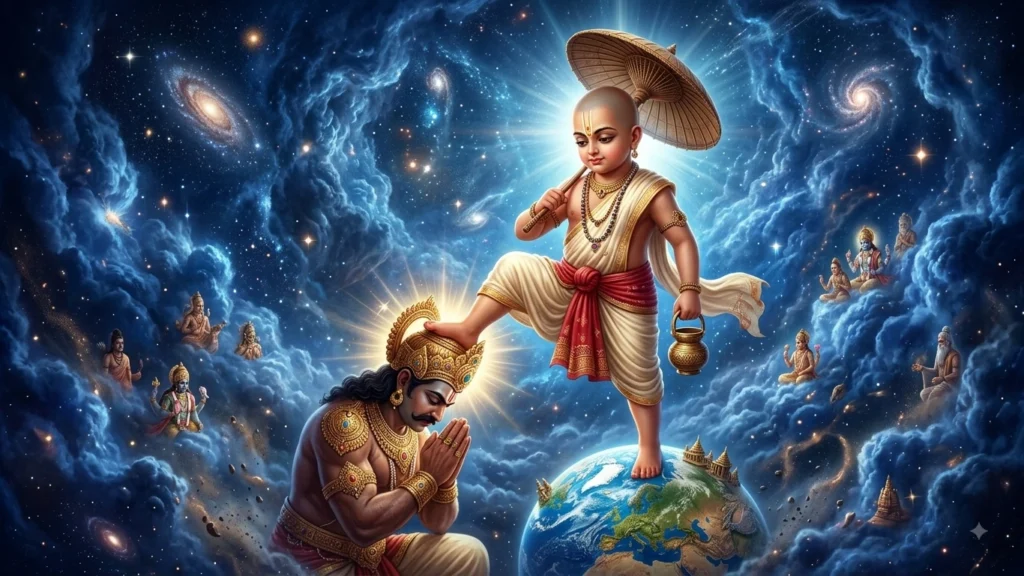
However, Mahabali’s growing power attracted the attention of the gods. According to the legend, Lord Vishnu appeared before Mahabali in the form of Vamana, a dwarf Brahmin.
The Story of Mahabali and Vamana
Vamana approached Mahabali and asked for three paces of land.
The generous king agreed.
Vamana then revealed his divine form. With the first step, he covered the earth. With the second, he covered the heavens. There was no space left for the third step.
Mahabali offered his own head for the final step.
Impressed by the king’s generosity and devotion, Vamana granted Mahabali a special wish. Mahabali requested permission to return to his kingdom once every year and meet his people.
According to tradition, Onam marks the time when Mahabali returns to Kerala to see his people.
This is why many Onam celebrations are filled with happiness and hospitality. Families symbolically prepare their homes to welcome their beloved king.
Why Is Onam So Important to Keralites?
Onam is more than a religious or harvest festival. It has become an important symbol of Kerala’s cultural identity.
The festival celebrates the idea of a society where people live together with equality, prosperity, and mutual respect. The story of Mahabali represents an ideal kingdom that continues to inspire Kerala’s cultural traditions.
Onam also provides an opportunity for families separated by work, education, or migration to come together.
For many Keralites, the festival creates a strong connection with childhood memories, traditional food, family gatherings, and village life.
The Importance of Thiruvonam
Onam celebrations continue for several days, but Thiruvonam is considered the most significant day.
Families traditionally wake up early, clean their homes, wear new clothes, prepare special dishes, and create beautiful Pookkalam designs.
The day is centered around family, food, celebration, and hospitality.
Many people also visit temples or participate in community celebrations. In modern Kerala, Thiruvonam is celebrated both at home and through public cultural programs.
Pookkalam: The Floral Welcome
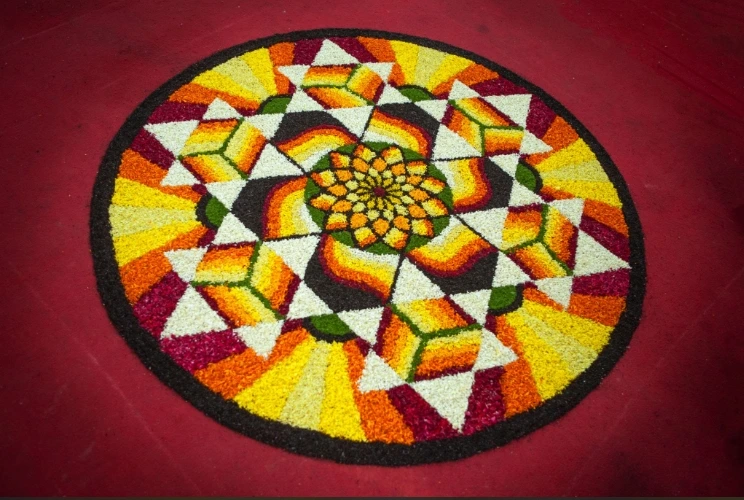
One of the most recognizable traditions of Onam is Pookkalam, a decorative arrangement made using flowers.
Families collect flowers and arrange them in circular patterns at the entrance of their homes. Traditionally, the Pookkalam grows larger and more elaborate as the days of Onam progress.
The flower carpet is not simply decoration. According to tradition, it represents the welcoming spirit of the festival and symbolizes the preparation to receive Mahabali.
Today, Pookkalam competitions are also organized in schools, offices, colleges, and public spaces across Kerala.
Onam Sadya: The Grand Traditional Feast
No discussion of Onam is complete without mentioning Onam Sadya.
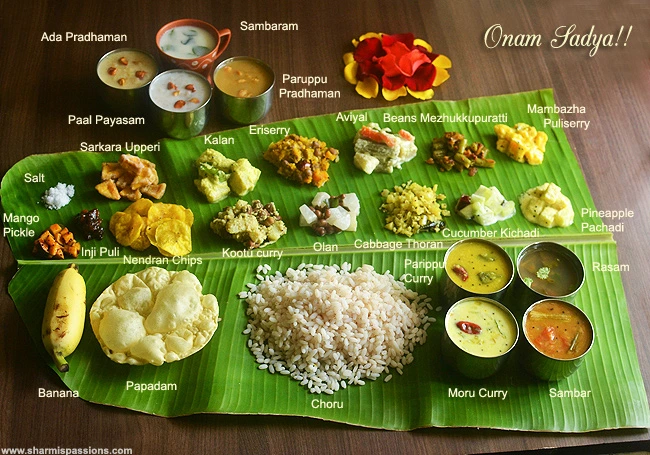
Sadya is a traditional vegetarian feast served on a banana leaf. It can include numerous dishes with different flavors, textures, and preparations.
Common dishes include:
- Rice
- Sambar
- Avial
- Thoran
- Olan
- Kalan
- Pachadi
- Kichadi
- Erissery
- Pickles
- Pappadam
- Banana chips
- Sharkara upperi
- Payasam
The exact dishes can vary between regions and families.
Sadya also represents togetherness. Family members often sit together and enjoy the meal, making food an important part of the social experience of Onam.
Onakkodi: Wearing New Clothes
Another popular Onam tradition is Onakkodi, the practice of wearing new clothes during the festival.
People traditionally buy new clothes for themselves and their family members. Traditional Kerala clothing such as kasavu sarees and mundu is especially popular during Onam.
Wearing new clothes represents celebration, prosperity, and a fresh beginning.
Today, people combine traditional clothing with modern fashion, creating a unique blend of old and new Onam traditions.
Vallam Kali: The Famous Snake Boat Race
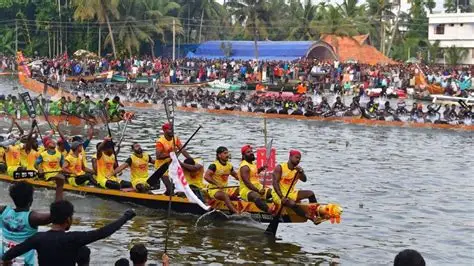
Vallam Kali, or the traditional boat race, is another major attraction associated with Onam.
Long snake boats, known as Chundan Vallams, are rowed by large teams of participants. The synchronized movement of the rowers creates an exciting spectacle.
Boat races are particularly famous in the backwaters of Kerala. They attract local communities, visitors, and tourists.
The races also highlight teamwork, discipline, coordination, and Kerala’s strong connection with its waterways.
Onam Games and Traditional Activities
Onam is also a time for traditional games and entertainment.
People participate in activities such as:
- Tug of war
- Uriyadi
- Traditional ball games
- Folk performances
- Music and dance
- Community competitions
Women may participate in Thiruvathirakali, while other cultural performances are organized during public celebrations.
These activities help preserve traditional forms of entertainment while giving people a chance to celebrate together.
Pulikali: The Tiger Dance
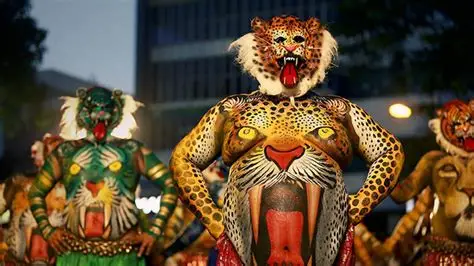
Pulikali, meaning “tiger play,” is one of the most colorful Onam traditions.
Performers paint their bodies with tiger-like patterns and dance to the rhythm of traditional percussion instruments. The performance is especially associated with Thrissur.
The energetic dance attracts large crowds and has become one of Kerala’s most recognizable cultural spectacles.
Pulikali shows how Onam combines folklore, art, music, humor, and community celebration.
Onam and the Harvest Season
Onam is also connected with Kerala’s agricultural traditions.
The festival arrives around the harvest season and historically provided an opportunity for farming communities to celebrate the results of their hard work.
Agricultural cycles played an important role in traditional Kerala society. Therefore, Onam became associated with abundance, food, prosperity, and gratitude.
Even though modern Kerala has become highly urbanized, this connection with agriculture remains an important part of the festival’s cultural meaning.
Onam as a Celebration of Equality
One of the most powerful ideas connected with the Mahabali story is equality.
The legendary kingdom of Mahabali is remembered as a place where people lived without discrimination and enjoyed prosperity.
This idea has helped Onam become a festival that brings different communities together.
People from different religious and cultural backgrounds participate in Onam celebrations, enjoy Sadya, create Pookkalams, exchange greetings, and organize cultural programs.
How Onam Is Celebrated Today
Modern Onam celebrations combine traditional customs with contemporary lifestyles.
Families living in cities continue to prepare Sadya and Pookkalam. Schools organize competitions, offices conduct Onam programs, and communities arrange cultural events.
People living outside Kerala also celebrate Onam in different parts of India and around the world.
Social media has added another dimension to the festival. People share Pookkalam designs, Sadya photographs, traditional outfits, family celebrations, and Onam greetings online.
Despite these changes, the central ideas of family, prosperity, hospitality, and cultural pride remain strong.
The Cultural Meaning of Onam
Onam represents more than the return of a legendary king.
It carries several cultural values:
- Togetherness: Families and communities celebrate collectively.
- Prosperity: The festival is associated with abundance and a successful harvest.
- Hospitality: Homes are prepared to welcome guests.
- Equality: The story of Mahabali represents an ideal society.
- Cultural preservation: Traditional food, clothing, games, music, and art are passed between generations.
- Gratitude: The festival provides an opportunity to appreciate nature, family, and community.
These values explain why Onam continues to remain important even as Kerala changes.
Onam Beyond Kerala
Although Onam originated within Kerala’s cultural landscape, its celebration has spread far beyond the state.
Malayali communities around India and across countries such as the United Arab Emirates, the United Kingdom, the United States, and other parts of the world organize Onam programs.
Community organizations often arrange Sadya, cultural performances, Pookkalam competitions, and traditional games.
For Malayalis living away from Kerala, these celebrations can provide a meaningful connection to their homeland and cultural heritage.
Conclusion
Onam is one of Kerala’s most meaningful festivals because it combines mythology, folklore, agriculture, food, family, art, and community traditions.
The story of Mahabali gives the festival its emotional heart. The belief that a beloved king returns each year to meet his people turns Onam into a celebration of love, memory, and belonging.
From colorful Pookkalams and delicious Sadya to Vallam Kali and Pulikali, every tradition adds another layer to Kerala’s cultural identity.
Ultimately, Onam celebrates the idea of a better society—one built on equality, prosperity, generosity, and togetherness. That is why, generation after generation, Keralites continue to welcome Onam with the same excitement and warmth.
Frequently Asked Questions
Why do Keralites celebrate Onam?
Keralites celebrate Onam primarily to commemorate the legendary annual return of King Mahabali. It is also associated with harvest, prosperity, family unity, hospitality, and Kerala’s cultural heritage.
Who was King Mahabali?
King Mahabali, or Maveli, is a legendary ruler remembered in Kerala folklore as a generous and beloved king whose kingdom represented prosperity and equality.
What is the main day of Onam?
Thiruvonam is considered the most important day of the Onam festival.
Why is Pookkalam made during Onam?
Pookkalam is a floral decoration traditionally created to welcome King Mahabali. It has become one of the most recognizable symbols of Onam.
What is Onam Sadya?
Onam Sadya is a traditional vegetarian feast served on a banana leaf. It includes rice, curries, side dishes, pickles, snacks, and desserts such as payasam.
Is Onam only a religious festival?
Onam has religious and mythological roots, but it is widely celebrated as a cultural festival by people from different communities.