
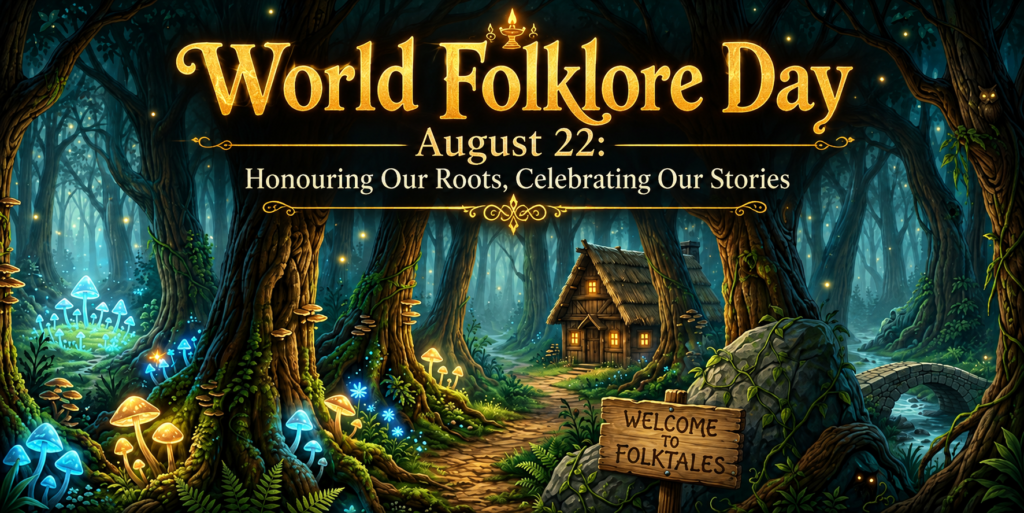
Every culture has stories that have traveled from one generation to another. These stories may tell us about ancient heroes, mysterious spirits, magical creatures, traditional festivals, gods, ancestors, and everyday life. Together, these stories form an important part of folklore.
World Folklore Day is celebrated on August 22 to recognize folklore and the people, traditions, stories, music, dances, crafts, and customs that shape cultures around the world.
From Kerala’s legends and Theyyam traditions to Japanese ghost stories and European fairy tales, folklore gives every community a unique cultural identity.
But what exactly is World Folklore Day, and why is August 22 important?
Let’s explore the history, meaning, traditions, and global importance of this special day.
What Is World Folklore Day?
World Folklore Day is observed annually on August 22 as a day to appreciate and promote folklore and traditional cultural heritage.
The word folklore refers to the traditional beliefs, stories, customs, songs, dances, sayings, rituals, crafts, and knowledge shared within communities.
Folklore was traditionally passed from one generation to another through storytelling and participation. Before books, television, and the internet became common, people depended heavily on oral traditions to preserve knowledge and entertain their communities.
Today, folklore continues to influence literature, films, music, art, tourism, fashion, and popular culture.
Why Is World Folklore Day Celebrated on August 22?
August 22 is connected with an important moment in the history of folklore studies.
On August 22, 1846, British writer and antiquarian William John Thoms used the term “folklore” in a letter published in The Athenaeum.
Thoms suggested the word as a replacement for expressions such as “popular antiquities” and “popular literature.” He combined the words folk, meaning people, and lore, meaning knowledge or learning.
The term gradually became widely accepted and is now used around the world to describe traditional cultural knowledge and expressions.
August 22 therefore became an important date for recognizing the study and preservation of folklore.
What Does Folklore Include?
Folklore is much bigger than traditional stories.
It includes many different forms of cultural expression.
Folk Stories and Legends
Folk stories are narratives passed through generations. They may explain mysterious events, teach moral lessons, describe supernatural beings, or preserve memories of historical figures.
Examples include legends about kings, warriors, spirits, witches, magical animals, and supernatural heroes.
Myths
Myths often explain the origins of the world, nature, gods, humans, or important cultural traditions.
Different civilizations developed their own mythological systems, including Greek, Norse, Indian, Egyptian, Japanese, and many indigenous traditions.
Folk Music
Traditional songs preserve the emotions and experiences of communities.
They may be connected to farming, weddings, festivals, religious ceremonies, work, war, love, or storytelling.
Folk Dance
Folk dances allow communities to express their history and identity through movement and music.
India alone has hundreds of traditional dance forms connected to different regions and communities.
Traditional Crafts
Handmade objects can also be part of folklore.
Pottery, weaving, wood carving, masks, paintings, jewelry, musical instruments, and traditional clothing often carry cultural meanings that have been preserved for generations.
Customs and Rituals
Traditional ceremonies, festivals, wedding customs, harvest celebrations, and community rituals are important parts of folklore.
These practices often connect people with their ancestors and cultural history.
World Folklore Day Around the World
Folklore exists in almost every society.
Each region has developed stories and traditions based on its environment, history, beliefs, and experiences.
India
India has one of the world’s richest folklore traditions.
Different states have their own legends, folk songs, dances, festivals, traditional arts, and supernatural stories.
In Kerala, folklore can be seen in traditions such as Theyyam, Thira, folk songs, temple rituals, serpent worship, and legends surrounding figures such as Odiyan and Kadamattathu Kathanar.
Kerala’s folklore also includes fascinating stories about Yakshis, spirits, magical practitioners, sacred groves, and legendary heroes.
Japan
Japanese folklore contains stories about supernatural beings known as yōkai, along with legends about spirits, ghosts, magical animals, and ancient heroes.
Stories of creatures such as kitsune and kappa remain popular even today.
Ireland
Irish folklore is famous for legends about fairies, leprechauns, ancient warriors, magical landscapes, and supernatural beings.
Many of these stories are closely connected with the country’s landscape and Celtic heritage.
Scandinavia
Scandinavian folklore includes fascinating stories about trolls, elves, giants, magical forests, and legendary heroes.
These traditions have influenced modern fantasy literature, movies, games, and television.
Africa
African folklore includes a huge collection of oral traditions, creation stories, animal tales, proverbs, songs, and legends.
Many traditional stories use animals as characters to teach lessons about intelligence, courage, cooperation, greed, and human behavior.
Why Is Folklore Important?
Folklore is more than entertainment. It acts as a cultural memory.
1. It Preserves History
Folklore can preserve memories of people, places, events, and social practices that may not appear in written historical records.
2. It Protects Cultural Identity
Traditional stories and customs help communities understand where they came from.
They create a connection between past, present, and future generations.
3. It Teaches Values
Many folk stories contain lessons about honesty, courage, kindness, loyalty, wisdom, and responsibility.
A simple story can teach an important lesson without feeling like a classroom lecture.
4. It Connects Generations
Grandparents telling stories to children is one of the simplest ways folklore survives.
These conversations create a cultural bridge between generations.
5. It Inspires Creativity
Folklore has influenced books, movies, animation, video games, paintings, music, and theatre.
Modern fantasy continues to borrow ideas from ancient legends and traditional beliefs.
6. It Supports Cultural Tourism
Traditional festivals, performances, crafts, museums, historical sites, and folklore experiences can attract visitors interested in local culture.
Folklore can therefore contribute to cultural tourism while encouraging communities to protect their heritage.
Kerala Folklore and World Folklore Day
Kerala provides an excellent example of how folklore remains part of everyday cultural life.
The state has a rich collection of myths, legends, rituals, performing arts, traditional occupations, folk songs, and supernatural beliefs.
Theyyam is one of the most recognizable examples. It combines elaborate costumes, powerful performances, music, ritual, and traditional beliefs.
Other fascinating areas of Kerala folklore include:
- Yakshi legends
- Odiyan stories
- Kuttichathan traditions
- Kadamattathu Kathanar legends
- Serpent worship
- Sacred groves
- Folk songs
- Temple legends
- Traditional healing beliefs
- Folk theatre and performances
- Traditional musical instruments
These traditions demonstrate that folklore is not simply something from the distant past. Many traditions continue to influence modern Kerala’s cultural identity.
How Can We Celebrate World Folklore Day?
You don’t need a large festival to celebrate folklore.
You can start with your own community.
Tell a Traditional Story
Ask grandparents, parents, or elders about stories they heard when they were young.
Write them down or record them with permission.
Explore Local Legends
Research the stories connected with your village, town, temple, monument, river, forest, or historic location.
Every community may have fascinating stories waiting to be discovered.
Learn a Folk Art
Try learning a traditional dance, song, craft, musical instrument, or storytelling style.
Visit a Cultural Festival
Attend traditional performances and cultural festivals to experience folklore directly.
Support Traditional Artists
Buying authentic handmade crafts or supporting folk performers can help traditional skills survive.
Share Folklore Online
Social media can help introduce traditional stories to younger audiences.
However, always respect cultural ownership, community beliefs, and the original context of the tradition.
Folklore in the Digital Age
Technology has changed how folklore is preserved and shared.
A story that once existed only through oral storytelling can now reach thousands of people through blogs, podcasts, videos, social media, digital archives, and documentaries.
This creates exciting opportunities for younger generations.
At the same time, digital sharing creates a responsibility.
Folklore can easily become distorted when stories are copied without understanding their cultural background. Some traditions may also be sacred or belong to specific communities.
Therefore, folklore content should be shared with accuracy, context, respect, and cultural sensitivity.
Is Folklore Still Relevant Today?
Absolutely.
Modern movies, anime, novels, video games, fantasy series, music, and social media regularly use ideas from folklore.
Vampires, werewolves, witches, ghosts, dragons, mermaids, fairies, spirits, and legendary heroes all have connections to older cultural traditions.
Folklore also helps people understand how earlier communities viewed nature, death, relationships, morality, spirituality, and the unknown.
In a rapidly changing digital world, folklore gives people something valuable: a connection to their roots.
World Folklore Day: A Celebration of Human Stories
The most beautiful thing about folklore is that no single culture owns the idea of storytelling.
Every community has its own stories.
Some are about gods. Some are about ghosts. Some celebrate heroes. Others explain nature or teach children important lessons.
The characters may be different, but many stories share universal themes such as love, fear, courage, jealousy, wisdom, survival, and hope.
That is why folklore connects people across borders.
Conclusion
World Folklore Day on August 22 is an opportunity to celebrate the stories, traditions, beliefs, arts, and knowledge that have shaped human communities for generations.
Folklore reminds us that culture is not found only in museums and history books. It lives in songs, festivals, dances, crafts, rituals, family stories, local legends, and everyday traditions.
As the world becomes increasingly digital, preserving these traditions becomes even more important.
This August 22, take some time to discover a folk story from your own community. Ask an elder about an old legend. Learn a traditional art. Visit a cultural performance. Or simply share a story that deserves to be remembered.
Because when we preserve folklore, we preserve the stories that help us understand who we are.